

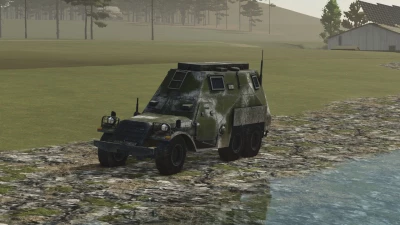
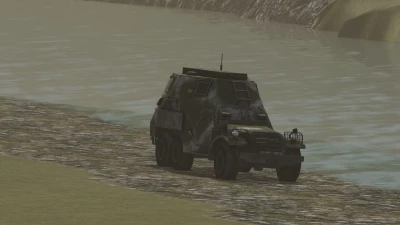
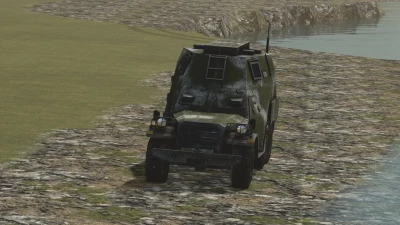
The BTR-152S (often referred to in technical circles as the Stadion variant) is a specialized Command and Control (C2) vehicle developed on the chassis of the BTR-152 armored personnel carrier. While the base BTR-152 was a troop transport, the "S" variant was designed to act as a mobile nerve center for tactical command.
Summary
The BTR-152S Stadion served as a critical mobile communications hub for Soviet motorized rifle and artillery units. By replacing troop benches with advanced radio equipment, folding tables, and specialized antennas, the vehicle allowed commanders to manage operations from protected, mobile positions. It represents a key iteration in Soviet command logistics, bridging the gap between basic field headquarters and fully integrated modern electronic warfare platforms.
Technical Characteristics
Modified Interior: Unlike the infantry transport versions, the interior of the Stadion was stripped of troop seating to accommodate racks for high-frequency (HF) and ultra-high-frequency (UHF) radio sets.
Communications Suite: Equipped with multiple radio stations (typically R-102 or R-103 series) and specialized power-generation equipment to ensure continuous operation in the field.
External Features: Distinguishable by its array of whip antennas and, in some versions, a telescopic mast that could be deployed when the vehicle was stationary to extend communication range.
Roof Design: Like the BTR-152K, the "S" variant typically featured an armored roof to protect the sensitive communication gear and the staff inside from small arms fire and shrapnel.
Military Importance
Tactical Coordination: The Stadion was essential for maintaining contact between battalion and regimental commanders and their forward units. In the high-intensity, fluid environment of the Cold War, the ability to issue orders and receive real-time updates while on the move was a distinct tactical advantage.
Reliability: Utilizing the proven, rugged ZIL-157 chassis ensured that command elements could follow the infantry across even the most challenging terrain, ensuring the leadership was always close to the front lines.
Standardization: The vehicle allowed the Soviet military to standardize its command infrastructure, ensuring that communication protocols were consistent across different motorized rifle formations.
Performance
Operational Role: It was not a combat vehicle designed for the front line, but rather a "stay-behind-the-line" asset. Its performance was measured by communication uptime and range rather than firepower.
Logistical Ease: Because it shared the chassis, engine, and drivetrain with the massive fleet of standard BTR-152s, maintenance was simplified for field mechanics, a critical requirement for a command vehicle expected to operate in harsh, remote environments.
Limitation: As with all BTR-152 variants, the vehicle suffered from the lack of amphibious capability and a high center of gravity. Furthermore, as electronic warfare technology evolved, the vehicle's massive external antennas made it a high-priority target for enemy signals intelligence (SIGINT) and artillery.
- 0 Likes
- 0 Comments
- 3 Downloads
-
 3
Downloads in
3
Downloads in
-
 1 hour ago


 Report file


COMMENTS
There are no any comments
Write a comment